'Mercy' Is Messy, and Somehow It Still Got Me
We found this one on Prime and went in completely blind. No trailers, no reviews, just a thumbnail and a premise that sounded interesting enough for a Friday night. I came out of it with more thoughts than I expected, so let's talk about it.
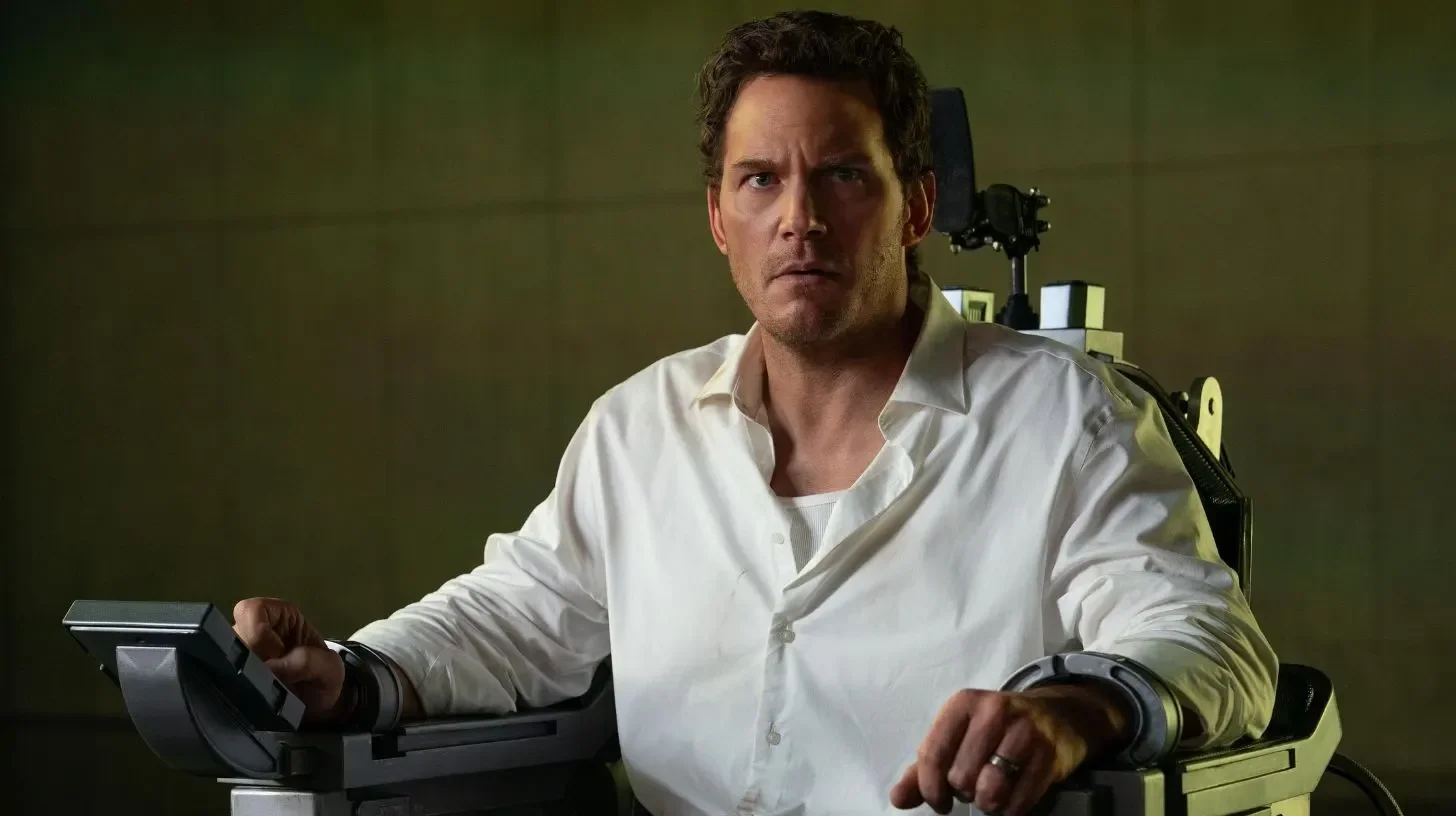
The setup: a near-future where an AI system called Mercy has replaced the entire judicial process. You get 90 minutes to prove your innocence or you're executed on the spot. Our main character, a detective who helped build the system alongside his partner, wakes up strapped to the chair accused of murdering his wife. He has 90 minutes to save himself. And in a funny way, the film had 90 minutes to prove it was worth our time.
The World Had Potential It Never Fully Used
My biggest issue is that the film tells you everything instead of showing you anything. The world is introduced through screens and dialogue explaining how the system works rather than just letting you feel it. For a dystopian story that's a problem. The best ones drop you into a world that feels lived-in. This one hands you a manual.
The film is set in what feels like 2029, and while AI being this embedded in the justice system is genuinely a conversation worth having right now, some of the world-building choices don't hold up. Flying motorcycles feel like they were thrown in just to signal "future," when the more unsettling version of this story would have leaned into what AI is already doing today. Deepfakes, surveillance footage, video clips you have to scrutinize because you genuinely can't tell what's real. The film touches that world but never fully lives in it. It hints at the dystopia without committing to it.
The Wrong Kind of Backstory
The character backstory also goes in the wrong direction. There's heavy focus on the detective's alcoholism and personal struggles, and while that's fine on its own, the more interesting story was right there untouched. He helped design Mercy alongside his partner. That irony had real potential and the film barely used it. Seeing how the machine came to be, what cases pushed for it, what it replaced, any of that would have made the stakes feel so much more real.
The first half is slow because of all this. You're waiting for the film to trust itself.
Then It Got Me
And then the detective work kicks in. The plot twists start layering. And honestly? It got me. Once the mystery started building I was leaning forward, genuinely questioning what was real. As a fan of dystopian stories the totalitarianism angle hit me the right way. An AI making life and death decisions with no visible human supervision, no appeals, no oversight on the other side, that made me genuinely angry at the system in the way the film probably intended.
But here's what kept nagging at me. Our main character is a detective. He knows how to investigate, pull evidence, and work a case under pressure. The AI even tells him at around the 40 minute mark that statistically there is nothing left to prove his innocence. And that's exactly when his instincts kick in and he starts unraveling the real truth.
So what happens to a regular person in that chair? Someone with no investigative background, no experience reading evidence, no gut instinct built from years of casework? The film never asks that question, and it should have. Because that's where the real horror of this system lives.
The Ending Drops the Ball
My biggest frustration is the ending. It wraps up the personal mystery and walks away. The partner faces consequences, the case resolves, and then nothing. No epilogue, no sense of what happens to the Mercy system after all of this, no public reaction, no political fallout. Even one brief scene of the world responding to what just happened would have changed everything about how this film lands. The personal story ends but the bigger question, whether this system should exist at all, just gets left on the floor.
Final Thoughts
Rebecca Ferguson is the standout. Playing an AI judge with zero emotion she somehow brings the most tension and presence to every scene. The lead role could have been filled by almost any working actor and the film would have been just as well served, probably for less of the production budget.
Mercy is not a great film. But if you enjoy dystopian stories and can push through a slow and over-explained first half, the second half earns your attention. It just never fully commits to the ideas it raises. It gets close, and then it blinks.
Worth a watch if dystopian thrillers are your thing. Go in blind like I did, keep your expectations in check, and let the second half do its job.